A local-minded guide to the sights that are actually worth your hours — plus what to eat, what things cost, and how to fit it into two or three days.

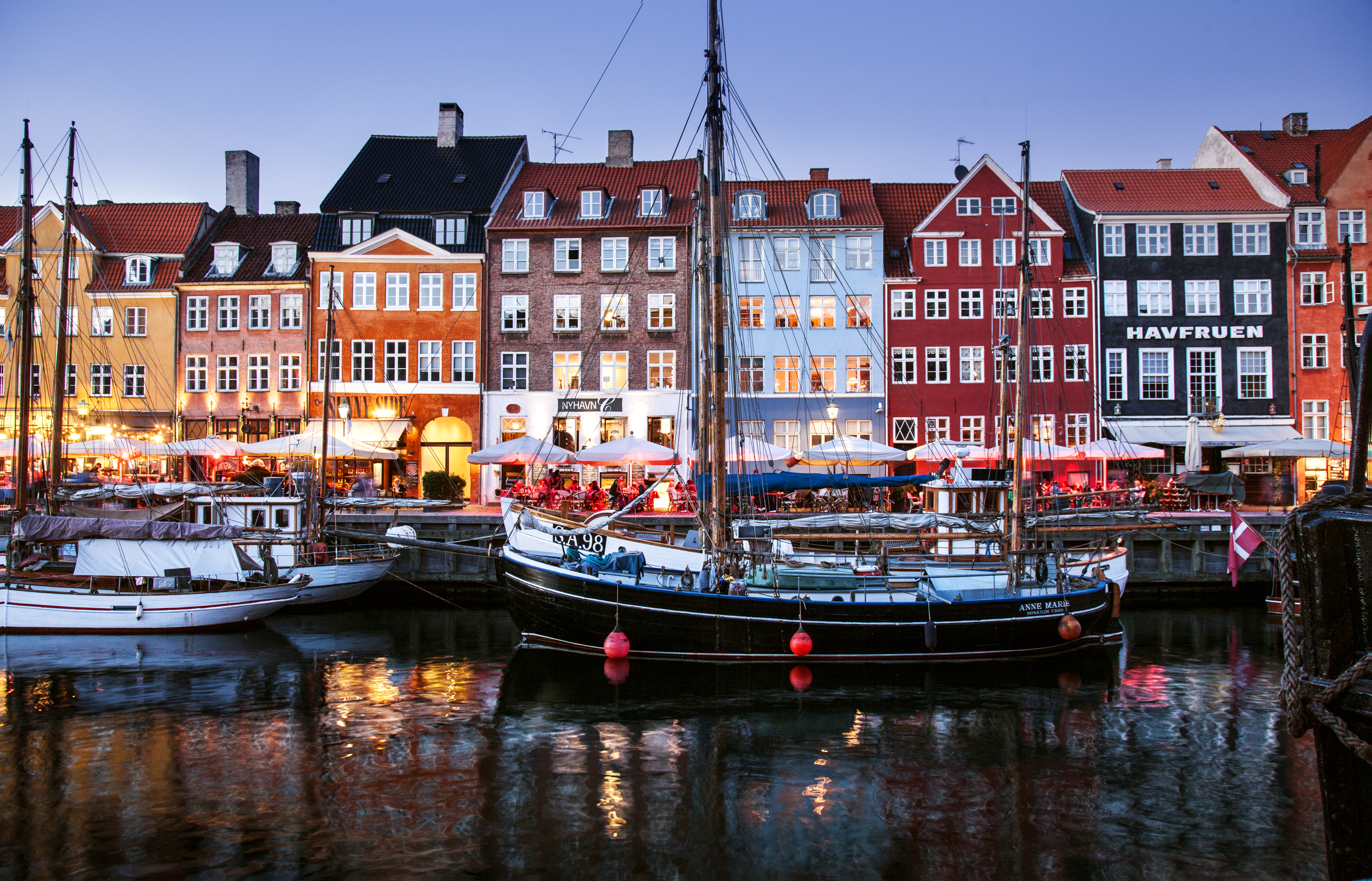
Nyhavn's 17th-century harbourfront — the image most people picture when they think of Copenhagen. Photo: European Commission, CC BY 4.0 — Wikimedia Commons
Copenhagen is a city that rewards walking. The historic core is barely two miles across, almost entirely flat, and stitched together by canals, bike lanes and squares where people simply sit. You can see the headline sights in two days. What you cannot rush is the reason people fall for the place: an unusually liveable capital where a royal palace, a 180-year-old amusement park and a swimmable harbour are all within twenty minutes of one another.
This guide covers the things to see in Copenhagen, Denmark that earn their place — ranked roughly by how much regret you'd feel skipping them — followed by the practical answers travellers actually search for: how many days you need, what it costs, whether it's safe, when to go, and what to bring home.
Quick Answer: The Essentials
Sight | Why Go | Time Needed |
|---|---|---|
The postcard canal; boat tours depart here | 45 min | |
Tivoli Gardens | Historic pleasure garden, best at dusk | 3–4 hrs |
Rosenborg Castle | The Danish crown jewels in the basement | 1.5 hrs |
Christiansborg Palace | Free-ish tower with the best city panorama | 1–2 hrs |
Church of Our Saviour | External spiral staircase up the spire | 1 hr |
Round Tower | Ramp, not stairs; 17th-century observatory | 45 min |
Amalienborg & Marble Church | Royal residence, guard change at noon | 1 hr |
Torvehallerne | Glass food halls; smørrebrød done properly | 1 hr |
Christianshavn & Christiania | Canals, then the counter-culture enclave | 2 hrs |
Harbour baths (Islands Brygge) | Swim in the middle of the city, free | 1–2 hrs |
The Best Things to See in Copenhagen
1. Nyhavn
The row of gabled merchant houses in mustard, ox-blood and cobalt along a 17th-century canal is Copenhagen's signature image, and yes, it is packed. Go at 8am and you will have it almost to yourself with the light coming from the east. Hans Christian Andersen lived at three separate addresses here — numbers 18, 20 and 67. VisitCopenhagen's Nyhavn page lists the current boat operators; the hour-long canal tour that leaves from the quay is the single best-value orientation in the city.
Local tip: the canalside beers cost roughly double what you'd pay a street back. Buy from a kiosk and sit on the quay like the Danes do — it's legal and expected.
2. Tivoli Gardens
Opened in 1843 and still one of the world's oldest operating amusement parks, Tivoli is not a theme park in the American sense. It is a landscaped garden with a wooden rollercoaster from 1914, a lake, a concert hall and thousands of hand-hung lanterns. Walt Disney visited and reportedly took notes. Go in the last two hours of daylight and stay for the lighting.

Tivoli Gardens at dusk, when the lanterns come on and the park is at its best. Photo: European Commission, CC BY 4.0 — Wikimedia Commons
Check seasons and prices on the official Tivoli site — it closes between seasons, and the Christmas and Halloween openings are the best of the year.
3. Rosenborg Castle and the Crown Jewels
A Dutch Renaissance summer house built by Christian IV in 1606, kept largely as the royals left it: painted ceilings, a coronation throne guarded by silver lions, and — down in the treasury — the Danish crown jewels, still in use. It is smaller than you expect and better than you expect.

Rosenborg Castle, built as Christian IV's summer house and now home to the crown jewels. Photo: Elgaard, CC BY-SA 3.0 — Wikimedia Commons
Booking details are on the Royal Danish Collection's site. The surrounding King's Garden (Kongens Have) is the city's oldest park and free to wander.
4. Christiansborg Palace
The only building on earth housing all three branches of a country's government — parliament, supreme court and the royal reception rooms — sitting on the island where Copenhagen was founded in 1167. Underneath are the excavated ruins of Bishop Absalon's original castle. The tower is the tallest in the city and, unusually, free to ride up.

Christiansborg Palace on Slotsholmen — parliament, supreme court and royal reception rooms in one building. Photo: Julian Herzog (Website), CC BY 4.0 — Wikimedia Commons
Official visitor information covers current opening hours for each section.
5. Church of Our Saviour
The best 25 minutes in Copenhagen. A black-and-gold corkscrew staircase winds around the outside of the baroque spire for the final 150 steps, with the treads narrowing as you climb and the whole city opening beneath you. Not for anyone uneasy with heights or high winds — it closes in bad weather.

The external spiral staircase of the Church of Our Saviour in Christianshavn. Photo: Avda, CC BY-SA 3.0 — Wikimedia Commons
Details at vorfrelserskirke.dk.
6. The Round Tower (Rundetaarn)
Europe's oldest functioning observatory, finished in 1642, reached by a 209-metre cobbled spiral ramp rather than stairs — built wide enough for a horse and cart to haul instruments to the top. Peter the Great supposedly rode up it. It is the most accessible viewpoint in the city and the least strenuous.

Rundetaarn — climbed by a spiral ramp wide enough for a horse and carriage. Photo: Avda, CC BY-SA 3.0 — Wikimedia Commons
See rundetaarn.dk.
7. Amalienborg and the Marble Church
Four identical rococo palaces around an octagonal courtyard, still the monarch's winter residence. The Royal Life Guards change at noon daily, and when the monarch is home the ceremony arrives with a band from Rosenborg.

Amalienborg's four rococo palaces around their octagonal courtyard. Photo: Rob Deutscher from Melbourne, Australia, CC BY 2.0 — Wikimedia Commons

Frederik's Church, universally known as the Marble Church, closes the axis at Amalienborg. Photo: Lars Mongs, Arxfoto, CC BY 4.0 — Wikimedia Commons
Directly on the axis stands Frederik's Church — the Marble Church — with the largest church dome in Scandinavia. Climb it on the weekend tour for a view straight down onto the palace square.
8. The Little Mermaid
She is small — 1.25 metres — and there will be a crowd. Unveiled in 1913 and paid for by the Carlsberg brewer Carl Jacobsen after he saw a ballet of Andersen's tale, she has been decapitated twice and blown off her rock once. Go because she is on the way along the Langelinie promenade from Amalienborg, not as a destination in her own right. Ten minutes is enough.
9. Torvehallerne and the Food-Market Circuit
Two glass halls at Nørreport holding about sixty stalls: smørrebrød, coffee roasters, fish, cheese, Danish-market produce. This is the easiest place to eat well without a reservation, and the cheapest way to try open sandwiches made properly rather than as a tourist set.
For the messier version, cross to Reffen on Refshaleøen, a street-food yard in an old shipyard — the harbour bus gets you there in fifteen minutes.
10. Christianshavn and Freetown Christiania
Amsterdam-like canals, houseboats and the city's best-preserved 17th-century street plan. Wedged inside it, Christiania is a self-declared autonomous community founded in a squatted naval barracks in 1971 — now a genuinely strange mix of hand-built houses, murals, workshops and a public park. Photography is prohibited on and near Pusher Street; that rule is taken seriously and you should respect it.
11–20: The Rest of the List, Briskly
Ny Carlsberg Glyptotek — antiquities and French sculpture around a palm-filled winter garden; the most beautiful interior in the city.
National Museum of Denmark — the Sun Chariot, bog bodies and the Vikings, told properly. Free entry.
Designmuseum Danmark — the chairs. If you care at all about Danish design, this is the source.
SMK (National Gallery) — Danish Golden Age painting plus a strong modern wing.
Islands Brygge harbour bath — swim in clean harbour water, free, in the middle of the city. Summer only.
Assistens Cemetery, Nørrebro — a park that happens to hold Kierkegaard, Andersen and Niels Bohr.
Jægersborggade — one Nørrebro street of ceramicists, coffee roasters and small restaurants.
Cisternerne — art installations inside a dripping former underground reservoir in Frederiksberg.
The Lakes (Søerne) — the local evening walk; do the loop at sunset.
Copenhagen Opera House and CopenHill — contemporary architecture, the latter a power plant with a ski slope on its roof.
Hidden Gems Most Guides Skip
Nyboder — rows of ochre naval terraces from 1631, still lived in, five minutes from Rosenborg and almost always empty of tourists.
Ørstedsparken — the prettiest small park in the centre, built on the old city ramparts.
Reffen and the Refshaleøen shipyards — street food, saunas and a cold-water bathing club on the far side of the harbour.
The Royal Library's "Black Diamond" reading room — walk in, sit by the glass wall over the water, pay nothing.
Værnedamsvej — a two-block food street on the Vesterbro/Frederiksberg line that feels borrowed from Paris.
Copenhagen in 2 or 3 Days
Day | 2-Day Plan | 3-Day Plan |
|---|---|---|
Day 1 | Nyhavn → canal boat → Amalienborg → Marble Church → Rosenborg → Tivoli at dusk | Same as 2-day Day 1, at a slower pace |
Day 2 | Christiansborg tower → Round Tower → Torvehallerne → Christianshavn → Church of Our Saviour | Same, plus the Glyptotek or National Museum |
Day 3 | — | Nørrebro (Jægersborggade, Assistens) or Refshaleøen → harbour bath → Tivoli evening |
Two days is genuinely enough for the classics. Three is the number most people wish they had booked. Four unlocks a day trip: the Louisiana Museum of Modern Art up the coast, Kronborg (Hamlet's Elsinore) at Helsingør, or Malmö in Sweden, 35 minutes over the bridge.
What It Costs
Item | Typical Price (DKK) | Approx. USD |
|---|---|---|
Tivoli entry (rides extra) | 165–185 | $24–$27 |
Rosenborg Castle | 150 | $22 |
Canal boat tour (1 hr) | 115–135 | $17–$20 |
Smørrebrød, one piece | 70–130 | $10–$19 |
Coffee | 40–55 | $6–$8 |
Beer, bar | 50–75 | $7–$11 |
24-hr transport pass, zones 1–4 | 105 | $15 |
Metro from CPH airport to centre | 36 | $5 |
If you plan on three or more paid attractions per day plus transport, the Copenhagen Card usually pays for itself; for two days of mostly walking and viewpoints, it does not. Prices above are indicative for 2026 and move with the season — check each attraction before you book.
Getting Around
The metro runs 24 hours, is driverless, and connects the airport to Kongens Nytorv in about 14 minutes. Harbour buses 991 and 992 are ordinary public transport priced as such, and function as a free-ish sightseeing cruise. Above all: rent a bike. Copenhagen has more bicycles than residents, protected lanes on nearly every artery, and no hills. Signal with your hand, keep right, and never stop in the lane.
Food You Should Actually Try
Smørrebrød
Open rye sandwiches. Pickled herring, breaded plaice with remoulade, or roast beef with crispy onions. Eat these at lunch, never dinner — that's the local rule.
Pølser
The red sausage from a street cart, with remoulade, mustard, raw and roasted onion and pickled cucumber.
Flæskesteg
Pork roast with proper crackling; also sold as a sandwich.
Wienerbrød
What the rest of the world calls a Danish. Try a kanelsnegl or a tebirkes at Juno, Hart or Andersen & Maillard.
New Nordic
The Noma school. If the flagship is out of reach, its alumni run Alchemist, Kadeau, Barr and dozens of more modest kitchens.
Safety, Weather and Etiquette
Is Copenhagen Safe?
Yes, by any international measure. Denmark sits at Level 1 — "exercise normal precautions" — in the US State Department's travel advisory system, the lowest of four tiers. The real risks are pickpockets in crowds and, far more likely, stepping into a cycle lane without looking.
When to Go
June to August gives you 17 hours of daylight, harbour swimming and outdoor dining; July is the warmest at roughly 21–22°C. May and September are quieter with decent weather. November and December bring the Christmas markets and Tivoli's best season. October and November are the wettest months — historical norms are published by DMI, the Danish Meteorological Institute.
Etiquette in Five Lines
Never walk or stand in a bike lane. This is the one thing that genuinely annoys Danes.
Tipping is optional; service is included. Round up if you liked it.
Dinner is early — 18:00 to 20:00 — and popular places need booking.
English is universal, but "hej" and "tak" are appreciated.
Tap water is excellent. Carry a bottle and refill it.
What to Buy
Danish design is the honest answer: Royal Copenhagen porcelain, a Kay Bojesen wooden monkey, Georg Jensen silver, a Hay or Stelton piece from Illums Bolighus. Cheaper and equally Danish: a tin of Lakrids by Bülow liquorice, a bag of cardamom buns, or a Lego set from the flagship store on Strøget. Skip the mermaid magnets unless they are for someone under ten.
Frequently Asked Questions
What not to miss in Copenhagen?
If you only tick off five things, make them Nyhavn, Tivoli Gardens, Rosenborg Castle's crown jewels, the spiral climb up the Church of Our Saviour, and a harbour bath or canal boat. Together they cover the postcard shot, the fairy-tale history, the best view in the city and the way Copenhageners actually spend their free time.
What is Copenhagen, Denmark best known for?
Colour-washed merchant houses at Nyhavn, the Little Mermaid statue, Tivoli Gardens (one of the world's oldest amusement parks), design and architecture, a bike-first street culture, hygge, smørrebrød and a New Nordic restaurant scene that includes Noma.
What are the top 10 things to do in Copenhagen?
Nyhavn, Tivoli Gardens, Rosenborg Castle, Christiansborg Palace tower, the Church of Our Saviour spiral spire, the Round Tower, Amalienborg and the Marble Church, a harbour bath swim at Islands Brygge, Torvehallerne food market, and a canal boat tour. Add the Little Mermaid if you want the photo.
Is 2 days enough to see Copenhagen?
Two days covers the classics comfortably because the centre is walkable and flat. Three days is the sweet spot: it adds one museum in depth, an outer neighbourhood such as Nørrebro or Refshaleøen, and slower time to eat. Four days lets you day-trip to Louisiana Museum, Kronborg or Malmö in Sweden.
What to be careful of in Copenhagen?
Bikes, mostly. Never stand in a cycle lane and always look left before stepping off a kerb. Beyond that: pickpockets in tourist crush points, cyclists themselves running red lights, and prices — Copenhagen is expensive, so budget before you order.
What is a must buy in Denmark?
Design objects: Royal Copenhagen porcelain, a Kay Bojesen wooden monkey, Georg Jensen silver, a Stelton or Hay piece, or a Lego set from the flagship store on Vimmelskaftet. Edible options: liquorice (Lakrids by Bülow), Danish butter cookies and cardamom-heavy bakery goods.
What is Copenhagen's famous food?
Smørrebrød — open rye-bread sandwiches, classically with pickled herring, breaded plaice, or roast beef with remoulade and crispy onions. Also flæskesteg (pork roast with crackling), pølser (hot dogs) from a street cart, and cardamom-scented pastries the Danes call wienerbrød.
Is it safe for US citizens to travel to Denmark right now?
Denmark sits at the lowest tier of the US State Department's advisory system — Level 1, exercise normal precautions — and has done so consistently. Always check the live advisory before booking, because ratings can change.
What is the best time of year to visit Copenhagen?
Late May to early September for long daylight, harbour swimming and outdoor dining; June and July are the warmest. Mid-November to December is the other high point, when Tivoli's Christmas market runs. February and March are the bleakest months.
Are there any areas to avoid in Copenhagen?
There is no tourist no-go zone. Parts of Nørrebro and Amager have occasional gang-related incidents that almost never involve visitors, and the area around Copenhagen Central Station gets rough late at night. Use normal city sense and you will be fine.
Why do so many Americans visit Copenhagen?
Direct flights from several US hubs, near-universal English, a compact and walkable centre, world-class food and design, and a strong safety record. It also works as an easy first stop before Sweden, Norway or the Baltic.
What is the prettiest part of Copenhagen?
Nyhavn for the colours, but locals will point you to Nyboder's ochre terraces, the cobbled Latin Quarter around Gråbrødretorv, the canals of Christianshavn, and the lakes (Søerne) at sunset.
Are Americans welcome in Copenhagen?
Yes. Danes are reserved rather than unfriendly — they will not chat on the metro, but they will help you at length if you ask. Politeness, queue discipline and not blocking bike lanes go a long way.
What time do people eat dinner in Copenhagen?
Early by southern-European standards: 18:00 to 20:00 is normal, and many kitchens stop taking orders around 21:00 or 22:00. Book ahead for anywhere well known.
Is it okay to speak English in Copenhagen?
Completely. Denmark ranks among the strongest non-native English-speaking countries in the world, and in Copenhagen essentially everyone in hospitality, transport and retail speaks it fluently. Learning "hej" (hello) and "tak" (thanks) is still appreciated.
What is cheaper to buy in Copenhagen?
Not much is cheap, but Danish design seconds, liquorice, bakery goods, supermarket smørrebrød ingredients and secondhand furniture beat what you would pay abroad. Alcohol is cheaper in Copenhagen than in Sweden or Norway.
What is the most bought souvenir?
Royal Copenhagen porcelain and the Kay Bojesen monkey at the design end; Lego, liquorice and a Little Mermaid fridge magnet at the everyday end.
What can I only get in Denmark?
Salty liquorice in its full local range, Danish-market Lego exclusives, genuine Royal Copenhagen Blue Fluted, Gammel Dansk bitters, and rugbrød (dense sour rye) as the Danes actually bake it.
What is the rainiest month in Copenhagen?
Autumn is wettest — October and November typically record the highest monthly precipitation. Rain in Copenhagen tends to be frequent and light rather than torrential, so a shell jacket beats an umbrella in the wind.
What US cities fly direct to Denmark?
Copenhagen Airport (CPH) has had nonstop service from New York (Newark and JFK), Boston, Washington Dulles, Chicago, Los Angeles, San Francisco, Miami and Seattle, with the widest choice in summer. Routes change seasonally, so verify on the airport's own departures list.
Is 3 days in Copenhagen too much?
No — three days is arguably the ideal length. Two days is a rush through the highlights; three lets you add a neighbourhood, a museum and a proper meal without the city feeling exhausted.
Are there pickpockets in Copenhagen?
Yes, as in every major European capital, and they concentrate at Central Station, Strøget, Nyhavn, on busy buses and around Tivoli's entrance in summer. Front pockets, zipped bags and a hand on your phone at cafés solve it.
What is the best area to stay in Copenhagen for tourists?
Indre By (the old centre) for first-timers, Nyhavn and Christianshavn for canal atmosphere, Vesterbro for nightlife and restaurants at slightly better value, and Østerbro or Frederiksberg if you want a quiet, residential base.
What is the best hotel to stay in Copenhagen?
It depends on budget rather than a single winner: Hotel d'Angleterre and Nimb (inside Tivoli) at the luxury end, Villa Copenhagen and Hotel Sanders in the boutique tier, and Wakeup Copenhagen or the Steel House hostel for value. Book two to three months ahead in summer.
What should I do in Copenhagen in 3 days?
Day 1: Nyhavn, canal boat, Amalienborg, Marble Church, Rosenborg. Day 2: Christiansborg tower, Round Tower, Torvehallerne, Church of Our Saviour, Christianshavn. Day 3: a neighbourhood — Nørrebro's Jægersborggade and Assistens Cemetery, or Refshaleøen for street food — plus Tivoli in the evening.
Do you tip in Copenhagen?
Service is included by law and staff are paid a living wage, so tipping is optional. Rounding up or leaving 5–10% for genuinely good restaurant service is normal but never expected, and nobody tips at cafés or bars.
Is phone theft common in Copenhagen?
Snatch thefts happen, but at a far lower rate than in Barcelona, Paris or Rome. The realistic risk is opportunistic: a phone left face-up on an outdoor café table or a back pocket in a crowd.
Which areas of Copenhagen are considered the poorest?
Outer Nørrebro, parts of Sydhavn, Tingbjerg and some Amager housing estates have the lowest average incomes. They are residential areas, not places tourists pass through.
What is the most common crime in Copenhagen?
Property crime — bicycle theft above all, followed by pickpocketing and shoplifting. Violent crime against visitors is rare.
Where do billionaires live in Denmark?
Mostly north of Copenhagen along the "Whisky Belt" coast: Hellerup, Charlottenlund, Klampenborg, Vedbæk and Rungsted, plus Frederiksberg inside the city.
What clothes should I pack for Copenhagen?
Layers year-round, plus a windproof waterproof shell and shoes that survive cobbles. Summer: t-shirts with a jumper for the evening and a swimsuit for the harbour baths. Winter: a proper coat, hat and gloves — the wind off the sound does the damage, not the temperature.
What are some hidden gems in Copenhagen?
Cisternerne (a subterranean former reservoir turned art space), the Nyboder terraces, Assistens Cemetery as a park, Reffen street-food yard on Refshaleøen, Frederiksberg Gardens, and the Ørstedsparken lakes.
Which month is the hottest in Copenhagen?
July, averaging highs around 21–22°C (70–72°F), with August close behind. Genuine heatwaves above 30°C happen but are short.
How do you say "hi" in Denmark?
"Hej" — pronounced like the English "hi". "Hej hej" means goodbye, "tak" is thank you, and "undskyld" is excuse me.
Why do Danes eat lunch so early?
Workdays start early — many people are at their desks by 08:00 — so the standard frokost break falls around 11:30 to 12:30, usually cold rye-bread food eaten quickly rather than a long sit-down meal.
What is the most eaten food in Denmark?
Rye bread, in one form or another. Beyond that: pork (Denmark's biggest agricultural export), potatoes, dairy, and pølser.
Is there a current travel warning for Denmark?
Denmark has consistently sat at Level 1 — the lowest tier — in the US State Department's advisory system. Check the live page before you travel, as terrorism-related wording is periodically updated across Europe.
Can you drink tap water in Denmark?
Yes. Danish tap water comes from groundwater, is strictly monitored and tastes good. Bringing a refillable bottle saves real money given restaurant prices.
Are Danes friendly people?
Reserved in public, warm once engaged. Small talk with strangers is uncommon, which reads as coolness to Americans, but ask a Dane for directions and you will often get walked to the corner.
What is a good souvenir from Copenhagen?
A Kay Bojesen wooden figure, a single piece of Royal Copenhagen, a tin of Lakrids by Bülow liquorice, or a print from one of the Nørrebro design shops. All are small, light and unmistakably Danish.
What is Denmark number 1 in?
Denmark regularly tops or near-tops global rankings for least corrupt country (Transparency International's Corruption Perceptions Index), highest levels of social trust, wind-energy share of electricity, and it is a perennial top-three finisher in the World Happiness Report.
What are some must-see places to visit in Copenhagen?
Nyhavn, Tivoli Gardens, Rosenborg Castle, Christiansborg Palace, Amalienborg and the Marble Church, the Church of Our Saviour, the Round Tower, Torvehallerne, Christianshavn and Freetown Christiania, and — for one photo — the Little Mermaid.
How to spend a rainy day in Copenhagen?
Museum-hop: the National Museum, Glyptoteket's winter garden, the Design Museum, or the SMK national gallery. Then a long café afternoon — this is exactly what hygge was invented for.