:max_bytes(150000):strip_icc()/__opt__aboutcom__coeus__resources__content_migration__serious_eats__seriouseats.com__2018__08__20180726-MHT-broiling-summer-squash-avocado-agrodolce-vicky-wasik-12--1500x1125-365d17b0281f411ca7e90f4281f71f3b.jpg)
The first time I saw a tromboncino squash at a farmers' market, I honestly didn't know what to do with it. It was coiled on the table like a pale green serpent—long, curved, and vaguely musical-looking, like something Dr. Seuss might have dreamed up. I bought it anyway, took it home, and proceeded to roast it exactly like I would any other squash. The result? Bland. Watery. Disappointing.
It took me a few more attempts—and a lot of trial and error—before I figured out the secret. And now, I can confidently say: tromboncino is one of the most underrated vegetables in the produce aisle.
If you've been wondering what to do with this curious-looking squash, you've come to the right place. This guide covers everything: what tromboncino tastes like, how to prepare it, and a collection of the best tromboncino squash recipes to try at home.
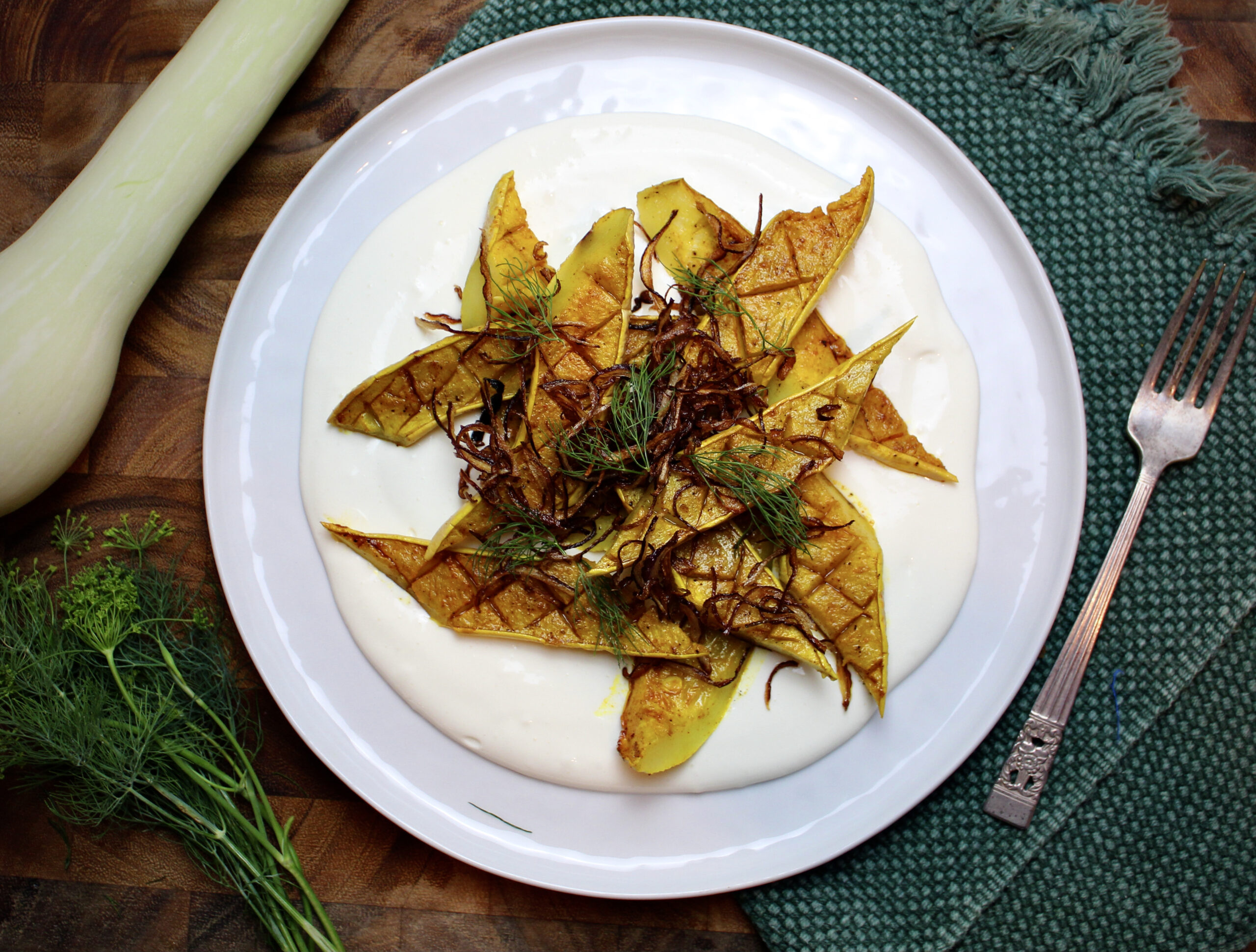
Photo Credit: Sow The Table
What Is Tromboncino Squash?
Tromboncino (also known as trombetta, zucchetta, or Italian hanging squash) is an heirloom variety of summer squash that originated in Italy. It's a vining plant that produces long, curving fruits that can grow anywhere from 10 inches to over 3 feet in length.
What makes tromboncino unique is its shape. The long, slender neck is completely seedless and firm, while all the seeds are contained in the bulbous end. This means the neck is pure, dense flesh with no waste—perfect for everything from roasting to spiralizing.
Summer Squash vs. Winter Squash: The Tromboncino Twist
Here's the fascinating thing about tromboncino: it can be eaten at two different stages.
Harvested young (6–10 inches), tromboncino is a summer squash—tender, pale green, and mild, similar to zucchini but firmer and less watery. The skin is thin and completely edible, and the flesh has a delicate, slightly sweet flavor.
Left to mature (up to 3 feet or more) , it transforms into a winter squash. The skin hardens and turns a pale tan or beige color, and the flesh becomes denser, sweeter, and nuttier—similar to butternut squash, though a little less sweet.
This dual nature makes tromboncino one of the most versatile vegetables you can cook with.
What Does Tromboncino Taste Like?
The flavor of tromboncino depends entirely on when it's harvested:
Stage | Flavor Profile | Texture |
|---|---|---|
Young (Summer) | Mildly sweet, delicate, like a sweeter zucchini | Firm, crisp, less watery than zucchini |
Mature (Winter) | Nutty, sweet, similar to butternut but less sugary | Dense, creamy, starchy |
One resource describes the flavor as "mildly sweet, nutty, with hints of artichoke". It's not a vegetable that demands attention—it's a vegetable that absorbs attention. Like tofu or a good potato, tromboncino takes on whatever flavors you cook it with, making it incredibly versatile.
How to Choose and Store Tromboncino Squash
Choosing the Right Squash
For young summer squash:
Look for pale green skin that's firm and unblemished
The squash should feel heavy for its size
Skin should be thin enough to easily pierce with a fingernail
For mature winter squash:
Look for a consistent, deep tan or beige color
The rind should be hard—you shouldn't be able to easily pierce it with a fingernail
A shriveled, brown tendril near the stem indicates readiness
Storing Tromboncino
Young summer squash: Store in the refrigerator crisper drawer for 4–7 days. Cut pieces will last in a sealed container for about a week.
Mature winter squash: Store in a cool, dry place at 50–60°F for 6–8 weeks. A properly cured mature tromboncino can last up to 3 months.
Freezing: Blanch cubes for 2 minutes, shock in ice water, dry, and freeze flat. Frozen tromboncino will keep for up to 12 months.
Do You Peel Tromboncino Squash?
This is one of the most common questions, and the answer depends on the squash's age:
Young, tender tromboncino: No need to peel. The skin becomes tender and delicious when cooked. Leave it on for extra fiber and texture.
Mature tromboncino: Yes, peel it. The skin hardens and becomes tough, so you'll need a vegetable peeler to remove it before cooking.
Stuffed recipes: Leave the skin on if you're using young squash—it acts as a sturdy shell for your filling.
The Best Tromboncino Squash Recipes
1. Roasted Tromboncino Squash (The Essential Method)
If you only try one tromboncino squash recipe, make it this one. High heat is the secret—425°F transforms this mild squash into something deeply sweet and nutty with caramelized edges.
Ingredients:
1 medium tromboncino squash (about 2–3 lbs)
2 tbsp olive oil
1 tsp kosher salt
½ tsp black pepper
½ tsp garlic powder
¼ tsp red pepper flakes (optional)
Instructions:
Preheat oven to 425°F (220°C). Line a baking sheet with parchment.
Wash and dry the squash. No need to peel young squash! Trim the stem and bulb end.
Slice the neck into ½-inch rounds. Cut the bulbous end in half, scoop out the seeds, then slice into ½-inch half-moons.
Toss with olive oil and seasonings. Spread in a single layer—don't overcrowd.
Roast 25–30 minutes, flipping halfway, until tender and caramelized.
Source: Adapted from Eatsip365 and EatHealthy365
2. Sautéed Tromboncino with Garlic and Herbs
A quick, 15-minute weeknight side dish that lets the squash shine.
Ingredients:
2 medium tromboncino squash, sliced into ½-inch rounds
2 tbsp olive oil
2 cloves garlic, minced
Salt and pepper to taste
2 tbsp fresh parsley or basil, chopped
Instructions:
Heat olive oil in a large skillet over medium heat.
Add garlic and sauté 1–2 minutes until fragrant.
Add sliced squash and cook 5–7 minutes, stirring frequently, until tender but still slightly crisp.
Season with salt, pepper, and fresh herbs.
Variation: Spiralize the squash for a low-carb pasta alternative.
Source: Dishbloom
3. Creamy Tromboncino Squash Soup
Roasting the squash first is the game-changer here—it caramelizes the natural sugars and concentrates the flavor.
Ingredients:
1 medium tromboncino squash (about 3 lbs), peeled, seeded, cubed
2 tbsp olive oil
1 large yellow onion, chopped
2 cloves garlic, minced
4 cups low-sodium vegetable broth
1 medium Russet potato, peeled and diced (for creaminess)
½ cup heavy cream (or coconut milk for vegan)
1 tsp kosher salt, ½ tsp black pepper
½ tsp fresh thyme leaves
Instructions:
Preheat oven to 400°F. Toss squash cubes with 1 tbsp olive oil, salt, and pepper. Roast 25–30 minutes until tender and caramelized.
While squash roasts, sauté onion in remaining oil until soft, 5–7 minutes. Add garlic and thyme, cook 1 minute.
Add roasted squash, potato, and broth. Simmer 15–20 minutes until potato is very tender.
Blend until smooth with an immersion blender.
Stir in cream and heat through. Don't let it boil after adding cream.
Source: Adapted from EatHealthy365 and Jill Carnahan
4. Tromboncino Gratin
Creamy, cheesy comfort food that turns this humble squash into something special.
Ingredients:
1 medium tromboncino squash, sliced into ½-inch rounds
1 cup heavy cream
2 cloves garlic, minced
1 cup grated Gruyère or cheddar
Salt, pepper, nutmeg
Breadcrumbs for topping
Instructions:
Preheat oven to 375°F. Butter a baking dish.
Layer squash slices in the dish, seasoning each layer with salt, pepper, and nutmeg.
Pour cream over the top and sprinkle with garlic and cheese.
Top with breadcrumbs and bake 30–35 minutes until bubbling and golden.
Source: The Wanderplate
5. Vegan Tromboncino Squash Brownies
Yes, you read that correctly. Tromboncino makes incredibly fudgy brownies because it contains less water than zucchini but enough moisture to keep them perfectly fudgy.
Ingredients:
2 cups grated tromboncino squash
200g dark chocolate (70% cacao), melted
½ cup vegan butter, melted
2 flax eggs (2 tbsp ground flax + 6 tbsp water)
¾ cup brown sugar
½ cup cocoa powder
1 cup all-purpose flour
Instructions:
Preheat oven to 350°F (180°C conventional). Line an 8x8-inch brownie tin.
Make flax eggs and let sit 10 minutes until gel-like.
Grate the tromboncino. If it's young, leave the skin on.
Mix melted chocolate, butter, sugar, and flax eggs. Fold in grated squash, cocoa, and flour.
Pour into tin and bake 25–30 minutes. Cool completely before cutting.
Source: The Wanderplate
6. Grilled Tromboncino Squash
Perfect for summer barbecues.
Ingredients:
1 medium tromboncino squash, sliced lengthwise into ½-inch planks
2 tbsp olive oil
Salt, pepper, and herbs
Instructions:
Brush squash planks with olive oil and season.
Grill over medium-high heat 3–4 minutes per side until tender with nice grill marks.
Source: Eatsip365
Health Benefits of Tromboncino Squash
Tromboncino isn't just delicious—it's genuinely good for you.
Nutrient | Benefit |
|---|---|
Low calorie | ~25–40 calories per cup |
High fiber | Supports digestion and blood sugar stability |
Vitamin C | ~30% of daily recommended intake per cup; supports immunity |
Vitamin A | Supports vision and immune health |
Potassium | Helps maintain healthy blood pressure |
Antioxidants | Fight inflammation and protect against disease |
It's also a good source of calcium, iron, zinc, and B vitamins including folate and thiamin.
Sources: Ask.EXTENSION, Specialty Produce, All Fit Well
Frequently Asked Questions
What is the best way to cook Tromboncino squash?
Roasting at 425°F is widely considered the best method. High heat caramelizes the natural sugars and drives off excess moisture, resulting in tender, sweet, nutty squash with crispy edges.
Do you peel Tromboncino squash?
Young squash: no need to peel—the skin becomes tender when cooked. Mature squash: yes, peel it—the skin hardens and becomes tough.
What does tromboncino taste like?
Young tromboncino is mildly sweet and delicate, like a sweeter zucchini. Mature tromboncino is nutty and sweet, similar to butternut squash but less sugary.
Can you eat tromboncino raw?
Yes! Young tromboncino can be eaten raw. Slice it thin and use it in salads or slaws—it's crisp and refreshing, like cucumber.
How do you know when tromboncino is ripe?
For summer harvest, look for consistent pale green color and a slight sheen. For mature winter squash, the skin should be a uniform deep tan or beige, and the rind should be hard. A dry, brown tendril near the stem is also a good indicator.
Can you freeze tromboncino squash?
Yes. Blanch cubes for 2 minutes, shock in ice water, dry, and freeze flat. Frozen tromboncino keeps for up to 12 months.
How long does tromboncino squash last?
Young squash: 4–7 days in the refrigerator. Mature winter squash: 6–8 weeks in a cool, dry place (50–60°F).
Is tromboncino good for you?
Yes. It's low in calories, high in fiber, and rich in vitamins A and C, potassium, and antioxidants.
What seasonings go well with tromboncino?
Garlic, thyme, sage, rosemary, nutmeg, cumin, paprika, chili flakes, Parmesan, and lemon all pair beautifully with tromboncino.
Is tromboncino a summer or winter squash?
Both! It's harvested as a summer squash when young and tender, or left to mature into a winter squash with a harder rind and sweeter flesh.
Sources & Further Reading
USDA FoodData Central – Nutrient data
Ask.EXTENSION – Benefits of Tromboncino Squash – Nutritional benefits
Specialty Produce – Tromboncino Squash – Flavor and nutrition